
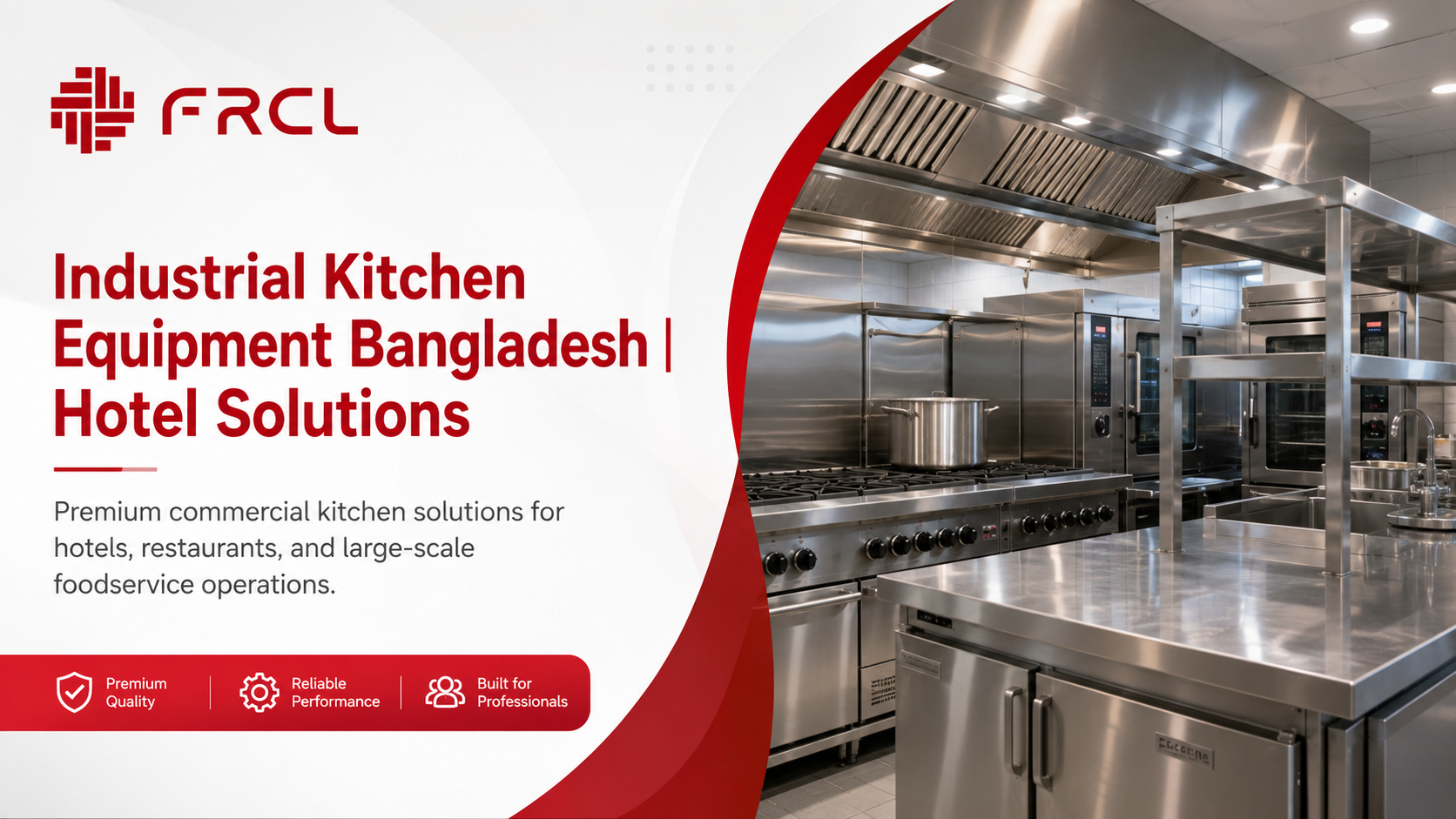
A restaurant kitchen normally prepares food according to customer orders. An industrial kitchen may produce hundreds or thousands of meals according to a fixed schedule.
Industrial operations often require:
Equipment designed for a small restaurant may not withstand this type of workload.
Industrial kitchen equipment is suitable for:
Each facility requires a different equipment configuration.
A hospital may need controlled meal preparation and specialized washing systems. A factory cafeteria may focus on producing large quantities of rice, curry and vegetables within a limited service period. A hotel may need several kitchens for banquets, restaurants, room service, bakery and staff meals.
Industrial cooking equipment is designed to produce large quantities consistently.
Common products include:
Tilting pans can be used for cooking rice, curry, soup, sauce and other bulk foods. The tilting mechanism helps transfer the finished product safely.
Steam kettles provide controlled heating for soup, sauce and liquid-based food production. They may offer more even heating than direct-fire cooking.
Industrial ranges support large pots and extended operating periods. Burner output and frame strength should match the intended load.
Stockpot burners are suitable for large cooking pots. Their height and burner design make them practical for bulk preparation.
Combi ovens combine different cooking environments and may support baking, roasting, steaming and reheating. Programmable models can improve consistency across repeated batches.
These machines can be used for frying, braising, boiling and batch cooking. They may reduce the number of separate cooking units required.
High-capacity rice cooking systems can help cafeterias and catering operations produce consistent batches while reducing manual supervision.
Manual preparation becomes slow and inconsistent when production volume increases.
Suitable preparation machines may include:
Before selecting a machine, calculate hourly output requirements. Also review loading method, discharge method, cleaning procedure and operator safety.
Large food operations need sufficient storage for raw materials, semi-processed products and finished food.
Refrigeration solutions may include:
Cold storage capacity should be calculated according to:
Overfilling refrigeration equipment can restrict airflow and make stock management difficult.
Hotels, hospitals and industrial kitchens generate large numbers of dirty plates, trays, glasses, pots and utensils.
Washing equipment may include:
A dishwashing system should be selected according to the number and type of items to be washed per hour.
The surrounding workflow is equally important. The system needs space for sorting, scraping, pre-rinsing, washing, drying and clean-item storage.
Hotels may operate several food-service areas at the same time.
These can include:
For this reason, hotel equipment suppliers in Bangladesh should be able to support different operational zones rather than provide a single general equipment list.
Banquet operations require large-volume cooking, holding and transport equipment. The kitchen may need combi ovens, stockpot burners, hot cabinets, bain-marie units, chafing dishes and service trolleys.
A hotel bakery may require spiral mixers, planetary mixers, dough sheeters, proofers, convection ovens, deck ovens, cooling racks and refrigerated preparation counters.
Coffee machines, grinders, blenders, ice makers, glass washers, juice dispensers and under-counter chillers may be required for restaurants, cafés and banquet services.
Depending on project scope, hotel equipment planning may also include laundry, housekeeping, waste-handling and service-trolley requirements.
Custom stainless-steel equipment helps use available space effectively.
Common fabricated items include:
The design should consider load, cleaning access, working height, wheel quality and staff movement.
Industrial equipment can place significant demand on building utilities.
Before installation, calculate:
List every machine’s power requirement and determine whether simultaneous use is possible. Heavy equipment may require three-phase power.
Calculate the combined gas consumption of ranges, ovens, fryers and bulk cooking equipment. Provide accessible emergency shut-off controls.
Dishwashers, ice makers, steam equipment and preparation areas may need filtered or treated water.
Washing and production areas require suitable drainage capacity, slope and cleaning access.
The ventilation system should address heat, grease, steam and smoke while providing sufficient replacement air.
Before appointing a supplier, evaluate:
The supplier should ask detailed questions about production and workflow. A quotation prepared without understanding the operation may not meet the project’s real needs.
In an industrial kitchen, equipment downtime can affect hundreds of meals and disrupt the entire service schedule.
A maintenance plan should include:
Critical operations may also require backup equipment or an alternative production method.
FRCL supports commercial and industrial food-service projects in Bangladesh through equipment consultation, supply, customized fabrication and installation coordination.
Project discussions may cover:
For a hotel or industrial project, customers can submit floor plans, equipment schedules, BOQ documents or operational requirements for review.
Industrial kitchen equipment includes heavy-duty cooking, food-processing, refrigeration, storage, washing and handling systems designed for high-volume food production.
Some commercial restaurant equipment may be suitable, but capacity, construction and duty cycle must be reviewed carefully. Light-duty equipment may not perform reliably under continuous industrial use.
FRCL provides commercial kitchen, bakery, refrigeration, beverage, washing and stainless-steel solutions suitable for different hotel operations.
Project requirements can be discussed for locations across Bangladesh. Delivery and installation conditions depend on equipment type and project location.
Provide the facility type, meal capacity, menu, kitchen dimensions, utility details, project location, preferred equipment and expected completion date.
An industrial kitchen should be designed around capacity, workflow, hygiene, safety and long-term operating cost. Correct equipment selection can support consistent production and reduce operational interruptions.
For industrial kitchen equipment or hotel equipment solutions in Bangladesh, contact FRCL.
Call: 01810-197458
Email: info@fatinrelieve.com